
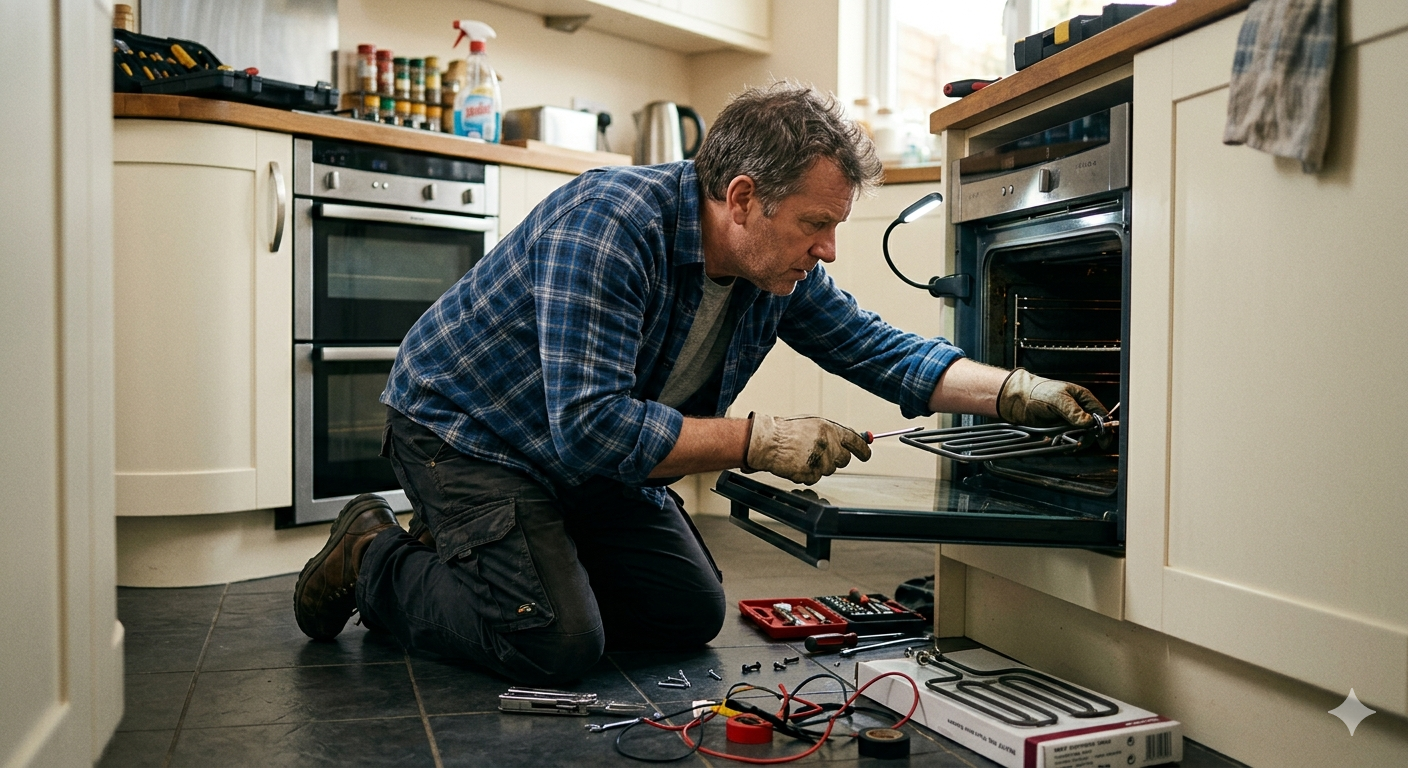
We all enjoy working on a project over the weekend. There are thousands of free tutorials online, so it’s easy to think that a quick search for “how to fix a leaky dishwasher” will save you a few hundred dollars.
But if your refrigerator, washing machine, or microwave is acting up, trying to fix it yourself could be a big risk. What looks like an easy $20 fix can turn into a $1,000 replacement very quickly.
Search terms like “appliance repair near me” are very popular right now because people need professional help, but many homeowners still try to fix things themselves first. Let’s look at five major reasons why fixing your appliances could end up costing you a lot more than you save before you grab your toolbox and start taking the back of your dryer apart.
1. You Risk Causing Even More Damage to the Appliance
A homeowner sees a small problem, opens the machine to fix it, and ends up making a much bigger one. Modern home appliances are very sensitive electronic devices.
How complicated modern electronics are
If you have a newer smart fridge or a washing machine that uses less energy, you have more than just belts and pulleys to worry about. You are working with computer boards, sensors, and fragile wires. A tiny slip of a screwdriver or static electricity from your hand can fry a control board. One of the most expensive repairs you can make is to replace a control board.
The Domino Effect of Incorrect Repairs
If you’re trying to fix a washing machine, you see that it’s shaking, so you think it needs new shock absorbers. You disassemble it and install new parts, but the tub is misaligned. That small misalignment causes the tub to crack the next time you run a load, which breaks the whole machine. Professional technicians know how to look at the big picture and make sure that one fix doesn’t break something else.
2. You Will Likely Void the Manufacturer’s Warranty

This is probably the most expensive mistake you can make when doing your repairs. Most big appliances come with a warranty from the maker that lasts from one to ten years.
The Fine Print Matters
If you read the fine print of your warranty, you will probably find a clause that says any repairs or changes that aren’t approved will void the agreement right away. Manufacturers do this because they can’t be sure a machine will work or be safe if an untrained person works on it.
A Real-World Example
Think about what would happen if your fridge stopped working. You think the starter relay is broken, so you order a cheap one online and replace it. The expensive compressor broke down a month later. A special parts warranty usually covers a compressor. But if the technician from the manufacturer comes and sees parts that aren’t standard and signs of amateur tampering, they can legally turn down your claim. If you’re uncertain about your unit’s coverage, hiring a certified appliance technician is the best way to safeguard your finances.
3. Buying the Wrong Parts and Specialized Tools
Many people think that by cutting out the middleman and buying the parts directly, they can save money on repairs they do themselves. There are many hidden costs and financial traps in this process for people who don’t know what they’re doing.
The Problem of Fake and Wrong Parts
There are a lot of cheap, fake appliance parts for sale on the internet. If you use these parts, your appliance may not work as well, or it may break down again in a few weeks. Furthermore, even within the same model number, appliances often come in many different versions. If you order a part that’s one digit off, it won’t fit, and you’ll have to pay to return it.
The Price of Specialized Tools
You can’t fix a modern fridge with just a hammer and a butter knife. Many repairs need very specific diagnostic tools, tension gauges, or wrenches that most homeowners don’t have lying around in their garages. If you have to buy $150 worth of tools that you’ll only use once and $50 for the part, you haven’t saved any money by fixing your microwave or stove yourself.
4. The High Risk of Damage to People and Property
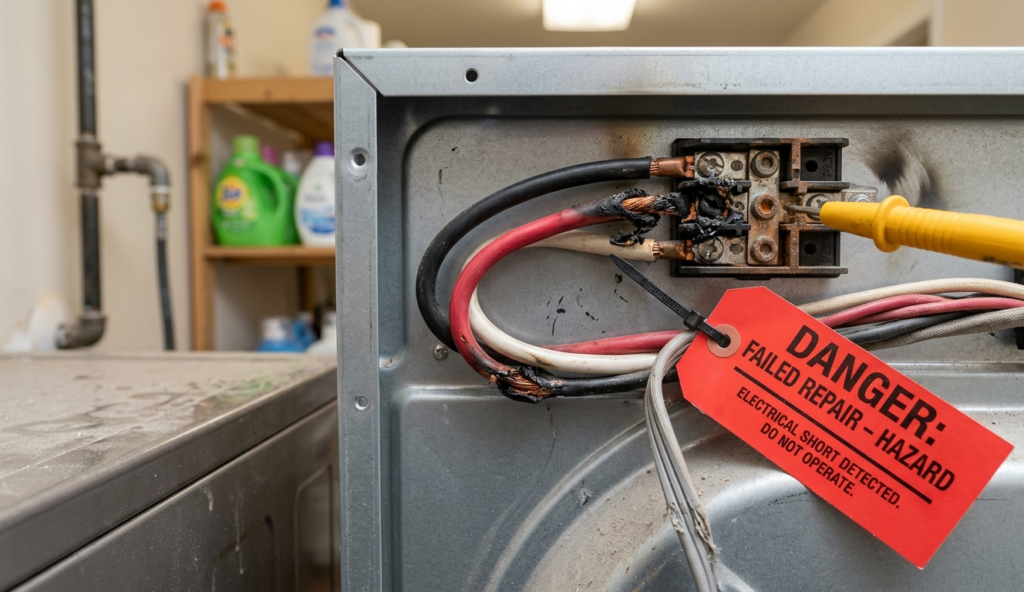
Appliances can be risky. They deal with a lot of electricity, water under high pressure, and gases that can explode. When you try to fix something yourself, you’re not just putting the machine at risk; you’re also putting yourself at risk.
Electrical and Fire Hazards
Electrical circuits that power appliances like dryers, ovens, and ranges run on 240 volts. This is twice as much voltage as a normal wall outlet, and it can be deadly if not handled properly. Some parts of an appliance, like capacitors, can hold a deadly electrical charge for hours, even when the appliance is unplugged.
Water Damage and Gas Leaks
If you are working on a dishwasher or washing machine, a loose hose clamp or an improperly seated valve can cause a slow leak. You might not notice it until it has rotted out your subfloor and caused thousands of dollars in mold damage. Even worse, trying to fix a gas stove or dryer without proper training can lead to carbon monoxide poisoning or gas leaks. To understand the true risks of working with home electrical systems, you can read this detailed article on appliance safety and electrical hazards provided by the Electrical Safety Foundation.
5. Your Time is Worth Money
We often forget to factor the value of our time into the “cost” of a DIY project. What is your weekend worth to you?
The Hidden Time Drain of DIY
A professional technician who does this every day can usually identify and fix a common appliance problem in less than an hour. They know exactly what to look for, and they have the parts in their truck.
For a beginner, that same repair process looks unique. You spend hours watching YouTube videos trying to diagnose the problem, days waiting for the part to arrive, and your Saturday afternoon struggling to get the machine apart and put it back together. If you are ready to let the experts handle it, you can book a scheduled visit here. We are happy to help and make sure your home appliances across Indianapolis are running safely and efficiently.
Frequently Asked Questions About Appliance Repair
Is it always less expensive to fix an appliance than to buy a new one?
Not all the time. The “50% rule” serves as a useful guideline. If the cost of the repair is more than half the cost of buying a new, working appliance, and the machine is already past the middle of its expected lifespan, it’s usually better to get a new one.
Can I safely clean my appliance coils and filters?
Most big appliances last between 10 and 15 years on average. Dishwashers and microwaves usually last 9 to 10 years, but with excellent care, refrigerators, dryers, and gas ranges can last 13 to 15 years.
How do I know when I need to call a pro?
If you smell gas, see sparks, hear loud grinding noises, or see standing water where it shouldn’t be, you should definitely call a professional. If you see an error code on your digital display and the manual doesn’t have an easy way to fix it, it’s time to look for appliance repair near me and let a pro take care of it.
Conclusion
While saving money is beneficial, true frugality requires a broader perspective. When you consider the chance of voiding your warranty, making things worse, having to buy special tools, putting your safety at risk, and losing your free time, DIY appliance repair rarely pays off. Let the pros handle the hard work and complicated wiring so you can relax knowing that the job was done safely and correctly.