
If you live in Indiana, you already know the drill. Our water is packed with limestone and heavy minerals. It’s the reason you see those annoying white spots on your clean dishes and why your skin feels so dry after a shower. But there is another victim of our local geology hiding right in your laundry room: your washing machine. It works hard every day, but it is constantly fighting a losing battle against mineral deposits. Over time, all that calcium and magnesium latch onto the inside of your appliance. The result? Poor performance, nasty smells, and eventually, a dead washer.
The best way to avoid a sudden, expensive breakdown is to stay ahead of the game. If your clothes are already coming out feeling scratchy or smelling a bit funky, it’s time to act. Don’t worry, flushing out that gross scale is actually pretty simple. You can do it yourself using just a few common household items. Taking care of this now, with a little advice from a trusted appliance repair company, will keep your machine running smoothly for years to come.
Let’s dive into the ultimate guide on how to safely blast away that stubborn mineral scale and get your laundry routine back to peak performance.
Understanding the True Impact of Hard Water on Your Washer
Before we grab the cleaning supplies, let’s look at what is actually going on inside your drum. When mineral-heavy water evaporates or gets heated up, those dissolved minerals solidify. They leave behind a crusty, chalky layer called limescale. This stuff acts like a thick insulator and a physical wall inside your machine.
Common Symptoms of Mineral Buildup
You can’t easily see the internal pipes and heating elements, but your laundry will definitely give you clues when something is wrong. Catching these warning signs early can save you from having to call in the pros for a costly repair.
Scratchy Fabrics and Dull Colors
When minerals coat the drum, your laundry detergent can’t dissolve the way it’s supposed to. Instead of creating a nice, rich lather, the soap bonds with the calcium to form a gummy curd. This gunk gets trapped right in the fibers of your clothes. It’s the main reason your towels start feeling like sandpaper and your bright clothes start looking dull and gray.
Foul Odors and Trapped Mold
Limescale might look smooth from a distance, but on a microscopic level, it is incredibly rough. This rough surface is the absolute perfect breeding ground for bacteria, soap scum, and mold spores to latch onto. If your washer smells musty or like rotten eggs even after running a cycle, severe mineral scaling is likely holding those odors hostage.
The Hidden Mechanical Damage
The real danger of mineral scaling is what happens to the parts you can’t see. When vital components get coated in rock-hard calcium, the mechanical stress on your washer goes through the roof.
Take your heating element, for example. If it’s coated in scale, it has to work twice as hard just to warm the water up. This spikes your energy bill and burns the element out way before its time. Plus, small chunks of broken scale can break off, travel through the system, and clog up your delicate drain pump or water valves. If your machine suddenly refuses to drain, you’ll likely need to call for professional washing machine repair to get the system cleared out safely.
Step-by-Step Guide to Flushing Your Washing Machine
Now that you know the heavy toll local water takes on your appliances, let’s walk through the steps to flush it all out. Forget expensive chemical cleaners. Good old-fashioned white vinegar and baking soda are incredibly effective at dissolving heavy calcium deposits.
Step 1: Prepare Your Machine and Gather Your Supplies
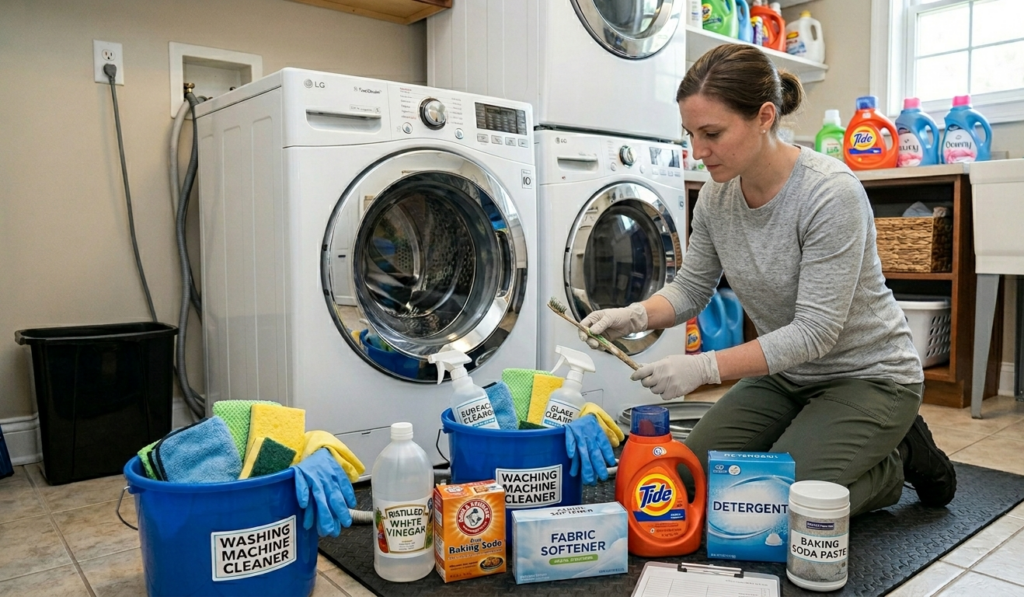
Before you start, make sure the drum is empty. Double-check for any stray socks or small garments stuck to the walls. For this project, grab a large gallon of standard white cleaning vinegar, a small box of baking soda, a microfiber cloth, and an old toothbrush to scrub the tight corners.
Step 2: The Hot Water and Vinegar Soak
Vinegar is a mild acid, making it perfect for breaking down alkaline calcium deposits without ruining the rubber seals or plastic parts of your washer.
Set your machine to the largest load size and the absolute hottest water setting you have. As the drum fills up, pour in four full cups of white vinegar. Let the machine agitate for about a minute to mix everything up. Then, pause the cycle! Let that hot vinegar solution sit completely still in the drum for at least an hour. This gives the acid time to eat away at the rock-hard scale on the drum walls and heating elements.
Step 3: Scrub the Detergent Dispenser and Seals
While the vinegar is doing its thing in the drum, focus on the outside parts. Pull the detergent drawer completely out. You’ll likely see a thick mix of gummy soap scum and crusty white buildup.
Take the drawer to your sink and give it a good scrub with your old toothbrush dipped in warm vinegar. Rinse it clean and let it air dry. Next, grab your microfiber cloth and wipe down the large rubber door boot (if you have a front-load model). This rubber fold is notorious for trapping standing water and breeding nasty black mold. For a helpful demonstration of how major brands advise cleaning these difficult areas, check out this excellent How to Clean a Washing Machine guide from Whirlpool.
Step 4: Run the Complete Cycle and Follow with Baking Soda
Once the hour is up, let the machine finish the complete wash and spin cycle. The force of the draining water will help push the loosened chunks of scale out through the drain hose.
After that cycle finishes, it’s time for phase two. Pour one cup of baking soda directly into the empty drum and run another hot cycle. The baking soda acts as a natural deodorizer and a mild abrasive to scrub away any leftover residue that the vinegar loosened up. When this second cycle finishes, leave the door wide open to let the interior dry out completely.
Long-Term Prevention Strategies for Indiana Homes
Flushing your machine is a fantastic habit, but because our local groundwater is so rich in limestone, the scale will always start to return immediately. To protect your investment, you should implement some long-term preventative habits.
Try to repeat this full vinegar flush at least once every three months to keep the buildup manageable. Also, always leave the washer door open between loads to prevent mold growth. Try switching to high-efficiency liquid detergents rather than heavy powders, which tend to clump up much worse in hard water.
If you are tired of fighting scale in all of your household appliances, you might want to consider investing in a localized inline water descaler or a whole-house water softening system. Softening the water before it ever reaches your appliances will extend their lifespan by several years. For more advanced tips on keeping all your home equipment running perfectly, look for a reliable appliance repair service near you.
When to Call the Professionals
While a vinegar flush can handle routine scale, it cannot fix physical or mechanical damage that has already happened. If you complete the flushing process but your unit still makes loud grinding noises, fails to spin, or leaks water onto your floor, the internal parts are likely compromised.
Attempting to take apart water pumps or electric control boards on your own is dangerous and can void your manufacturer’s warranty. When DIY maintenance isn’t enough to get the job done, it’s always best to let a certified technician take over the heavy lifting. If you need expert diagnostic assistance for any of your heavy laundry equipment, you can easily book a professional diagnostic visit by heading over to our dedicated service page. Our local technicians are highly trained to handle everything from minor valve clogs to major motor replacements, ensuring your home runs smoothly again in no time. If you have any immediate questions or want to speak directly with a member of our friendly support team about your specific appliance issue, please do not hesitate to reach out to us at contact us.
Frequently Asked Questions
Can I use bleach instead of vinegar to remove hard water scale?
No, don’t use bleach for descaling. While bleach is excellent for killing mold and sanitizing the drum, it does absolutely nothing to dissolve calcium and mineral deposits. In fact, mixing bleach with any leftover vinegar residue creates toxic chlorine gas, which is extremely dangerous. Always stick to vinegar for mineral removal.
How often should I flush my machine if I live in Indiana?
Because our water has such a high mineral content, we highly recommend flushing your machine once a month, or at the absolute bare minimum, once every 90 days. Regular maintenance prevents the scale from becoming too thick to remove.
Will hard water damage my appliance warranty?
Many manufacturers consider routine descaling and cleaning to be part of normal owner maintenance. If a part fails directly because it was completely caked in neglected mineral scale, the manufacturer might actually deny your warranty claim. Keeping a routine log of your cleanings is always a smart idea.
Is powder detergent or liquid detergent better for hard water?
Liquid detergent is generally much better for hard water conditions. Powder detergents require a lot of water softeners to dissolve correctly, and they often leave behind a chalky, undissolved residue on your clothes when mixed with heavy calcium.
H3: Can I use CLR or commercial descalers in my washing machine?
You can use specialized commercial washing machine cleaners that are specifically labeled safe for appliances. If you use certain smart digital models, read the official Samsung washer descaling instructions to handle high-tech equipment safely.