
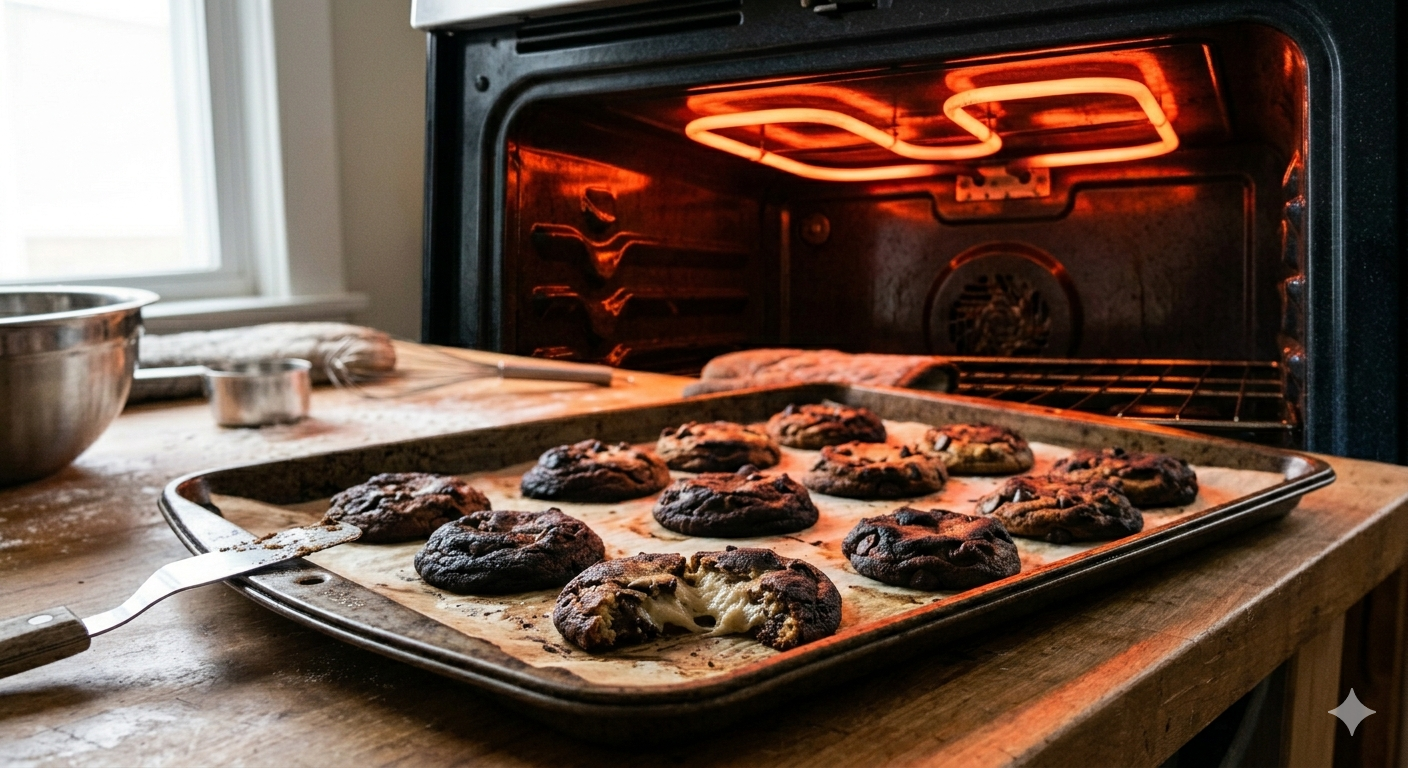
There is nothing quite as frustrating as pulling a tray of chocolate chip cookies out of the oven only to find that half are burnt to a crisp while the other half are still raw and gooey in the middle. You followed the recipe perfectly, set the correct temperature, and timed it to the minute. So, what went wrong? The likely culprit is that your electric oven is cooking unevenly. When your oven fails to distribute heat properly, baking becomes a guessing game and ruins perfectly good meals.
For residents of Indiana and the surrounding areas, dealing with a faulty kitchen appliance can throw off your entire household routine. While some oven issues require a licensed technician to diagnose and repair, several common causes of uneven heating can be fixed with just a little bit of troubleshooting at home.
In this comprehensive guide, we will break down the primary reasons why your electric oven is heating unevenly, how you can safely identify the problem, and when it is time to put down the oven mitts and call in a local expert for a professional fix. For advanced technical guides on electric diagnostics, you can also check out this helpful manufacturer’s troubleshooting guide from Whirlpool regarding common oven heating issues.
Common DIY Mistakes That Cause Uneven Heating
Before you assume that a costly mechanical part has failed and start searching the internet for emergency appliance repair, it is wise to rule out the simplest explanations first. Often, uneven baking is simply the result of how the appliance is being used rather than a broken internal component
Improper Rack Placement
Believe it or not, where you place your baking racks inside the cavity makes a massive difference in how your food cooks. Heat naturally rises, meaning the top of your oven is usually the hottest zone. If you are baking a delicate cake on the very top rack, the top will likely burn before the center has a chance to fully bake.
- The Fix: For the most balanced heat distribution, always place your food on the center rack unless a specific recipe explicitly tells you to do otherwise. This allows the hot air to circulate evenly around the top, bottom, and sides of your dish.
Overcrowding the Oven Cavity
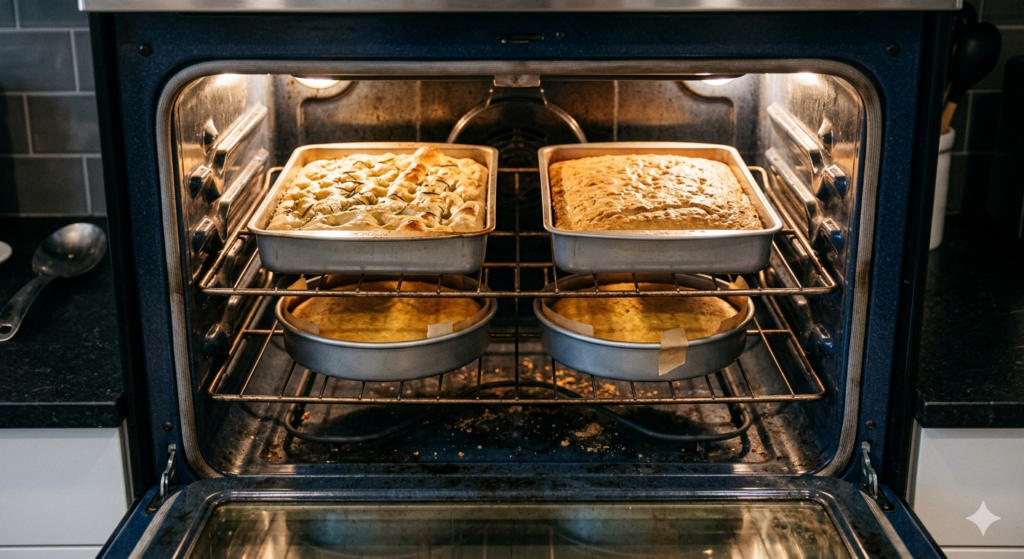
We all want to save time in the kitchen by cooking multiple dishes at once. However, putting too many pans inside the cavity at the same time blocks the natural flow of hot air. When the air cannot circulate freely, you end up with localized hot spots and cold spots, leaving some dishes burnt and others undercooked.
- The Fix: Give your food some breathing room! If you must bake on multiple racks at the same time, try to stagger the pans so that one is not directly sitting above the other. This gives the rising heat a clear path to move around.
Peeking Through the Door Too Often
It is incredibly tempting to open the door every few minutes to check on your dinner, but doing so lets out a massive amount of accumulated heat. Every time you open that door, the internal temperature can drop by as much as 25 to 50 degrees Fahrenheit. The appliance then has to work overtime to bring the temperature back up, leading to severe temperature fluctuations and uneven baking results.
- The Fix: Rely on your oven light and the glass viewing window to check on your food instead of opening the door. Only open it when it is necessary to rotate a pan or test for doneness near the end of the baking cycle.
Mechanical Issues Causing Uneven Oven Heat
If you have adjusted your cooking habits and checked your rack placements, but your electric oven is still heating unevenly, it is time to look at the mechanical components. Electric units rely on a delicate balance of heating elements and sensors to maintain a steady temperature. When one of these fails, your cooking will suffer.
A Failing Bake or Broil Element
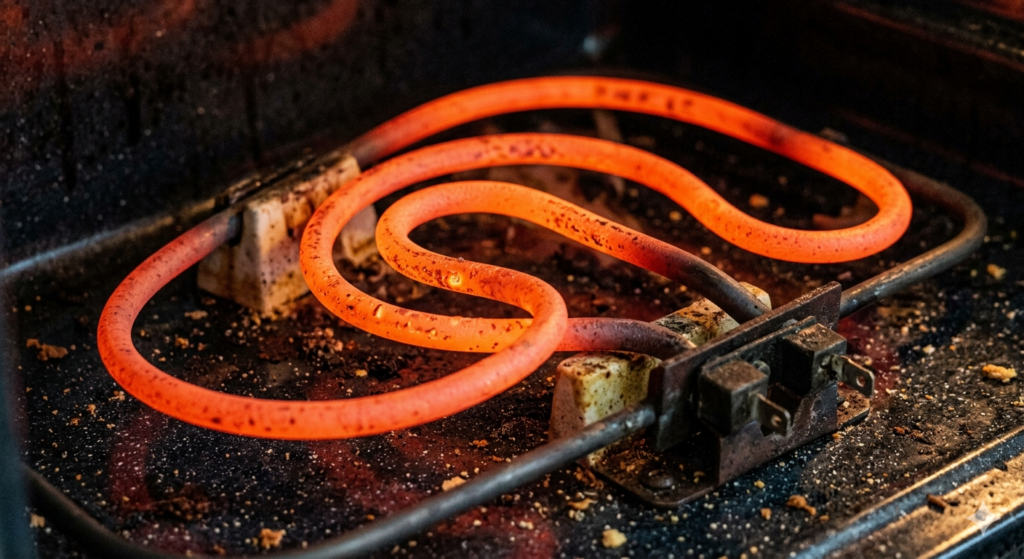
Most standard electric ovens feature two main heating elements: the bake element located at the bottom of the cavity and the broil element located at the very top. During a normal baking cycle, both of these elements cycle on and off to maintain a consistent environment. If the bottom bake element burns out completely, your food will only be heated from the top, leaving the bottom raw.
- The Fix: Wait for the appliance to cool down completely, then visually inspect both elements for any obvious signs of physical damage. Look for blisters, cracks, warping, or spots that look separated. You can also turn the unit on for just a minute to see if the elements glow bright red. If a section remains dark or if you see physical damage, that part needs to be replaced.
A Malfunctioning Temperature Sensor
The temperature sensor is a small, thin probe usually located near the top back corner of the cavity. Its primary job is to measure the internal heat and tell the control board when to turn the heating elements on or off. Over time, this sensor can degrade or drift out of calibration. If it is sending the wrong readings to the control board, your appliance might think it is at 350° when it is actually only at 300°.
- The Fix: You can check to see if the sensor is touching the interior wall. If it is leaning against the metal wall, it will give false readings. Gently bend it away so it only measures the air. To truly test the sensor, a technician will need to use a specialized multimeter to check its electrical resistance.
When to Call the Appliance Repair Professionals
While checking your racks and inspecting heating elements for visual damage are safe tasks for any homeowner in Indiana, there comes a point where DIY repairs become dangerous. Appliances utilize high-voltage 240-volt electrical connections that can cause severe injury if handled improperly.
If you suspect that your unit requires complex electrical testing, a new electronic control board, or a full calibration, it is always best to let a certified technician handle the job safely. You do not want to risk damaging your expensive kitchen appliance further or putting your household at risk of an electrical fire.
To guarantee that your expensive kitchen assets are well cared for, explore our professional oven repair services to see how our team can safely restore your appliance to perfect working order.
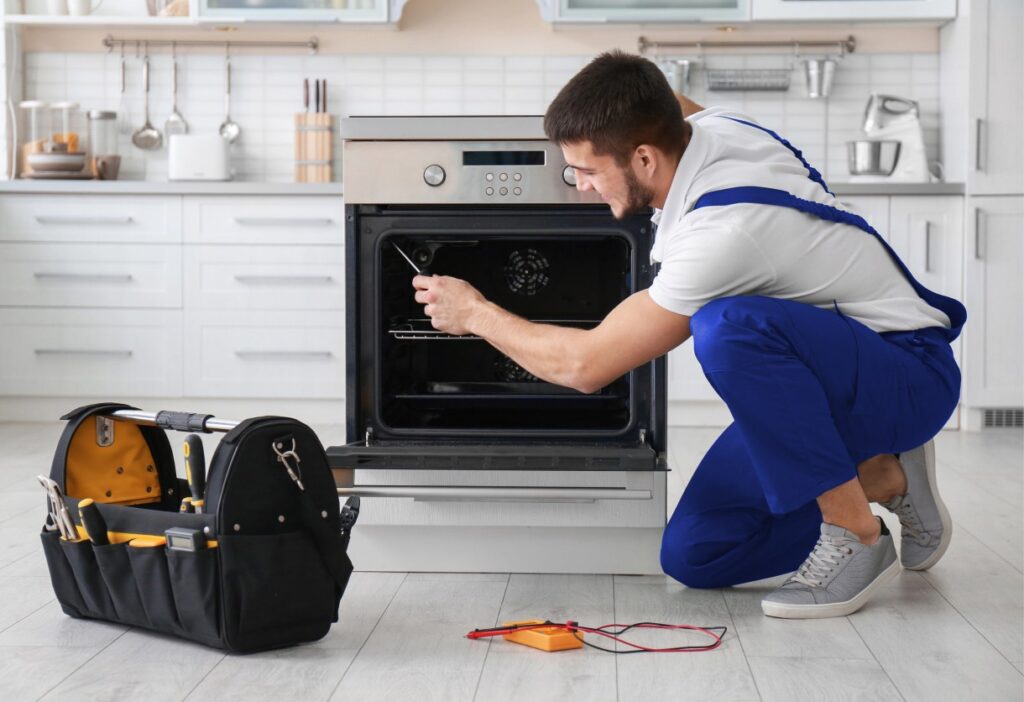
Whether you need a quick fix for a stove or you are looking for local experts to handle a complex washing machine repair, professional technicians have the specialized tools and diagnostic equipment to find the exact root cause of the problem quickly. Trust the local experts at Indy Appliance Xperts for fast, reliable, and honest appliance care.
Frequently Asked Questions About Oven Repair
How do I know if my temperature sensor is bad?
If your food is consistently burning or taking way too long to cook despite setting the correct temperature, your sensor might be failing. A professional tech can test its resistance using a specialized multimeter tool.
Can I replace an electric heating element myself?
While it is physically possible for a handy homeowner to replace a push-in baking element, we always recommend hiring a professional. Working with high-voltage appliance wiring carries a high risk of electric shock and fire hazards if not connected perfectly.
Why does my gas stove click, but the oven won’t light?
This is usually caused by a weakened or failed igniter. The igniter must get hot enough to draw the correct electrical current to safely open the gas valve. If it fails to do so, the unit will click but never light. For safety, this should always be handled by a professional technician.
How much does it cost to repair a broken heating element?
The cost generally depends on the specific brand and model of your appliance. On average, you can expect to pay for the replacement part plus local labor rates. Contacting a local service directly is the best way to get an accurate quote for your specific area.
How can I test my oven for hot spots?
A fun and easy way to find hot spots is the bread test! Cover the center rack with slices of plain white bread and bake them at $350^\circ$ for a few minutes. When you pull them out, the slices that are darker than the others will clearly show you exactly where your hot spots are located.
Can a damaged oven door seal cause uneven heating?
Yes, a broken or worn-out rubber gasket around the door will leak massive amounts of localized heat. This creates cold pockets right by the front of the cavity and causes the back to cook faster than the front.
Do I need a professional to calibrate my oven?
Many modern digital units allow homeowners to adjust the calibration in $5^\circ$ increments using the display screen options. Check your user manual first to see if it is a task you can comfortably complete on your own before paying for a diagnostic call.
Final Thoughts on Keeping Your Appliances Running Smoothly
Cooking a great meal should be a joyful experience, not a stressful guessing game. By understanding how your appliance distributes heat and keeping an eye out for failing parts, you can ensure that your baking stays perfectly consistent every single time.
If you have tried the basic troubleshooting steps and your food is still coming out unevenly, do not hesitate to reach out to local experts who understand how to get your kitchen back in perfect working order safely.
Ready to finally get that frustrating kitchen issue resolved today? Contact us today right now to book your convenient diagnostic appointment.