

A refrigerator that makes noise can be more than just a small problem. For many people in Carmel and Fishers, the hum, buzz, or rattle of a fridge is just a part of everyday life. But then it gets louder or changes tone. That’s when people who own homes start to wonder, “Is this normal, or is my fridge about to break down?”
Some sounds are completely normal, while others are signs that something is wrong. In Indiana, seasonal changes can strain appliances, especially in hot summers and cold winters. Such conditions can make sounds louder. Knowing the difference between sounds that aren’t a problem and sounds that are can help you save money, stress, and even keep food from going bad. This guide tells you the most common reasons why refrigerators make noise, some easy fixes you can try at home, and when you should call a professional appliance repair service in Carmel and Fishers.
Is It Normal for Refrigerators to Make Sounds?
Yes, refrigerators are machines with moving parts, so they will make some noise. Sounds that are common in everyday life include:
- Humming when the compressor is on
- Buzzing from fans circulating air
- Clicking when the compressor cycles on and off
- Popping or sizzling during defrost cycles
- Knocking or grinding when the ice maker is filling or dropping cubes
Most of these are not dangerous. But if the noise gets too loud, stays the same, or changes suddenly, you should look into it. Think of it like your car: a little noise is okay, but a loud rattle usually means something needs to be fixed.
Common Causes of Refrigerator Noise
1. A Dirty or Broken Condenser Fan
The fan on the condenser moves air over the coils to help cool the fridge. When dust, pet hair, or other debris builds up, the fan has a hard time working and makes a loud buzzing or rattling sound.
How to fix it:
- Unplug the refrigerator for safety.
- Locate the fan (usually at the back or bottom).
- Use a soft brush or vacuum to clean it.
- If cleaning doesn’t help, the motor may need replacement by a technician.
Many Carmel homeowners with pets notice this problem more often, since fur easily clogs the fan.
2. Problems with the Evaporator Fan
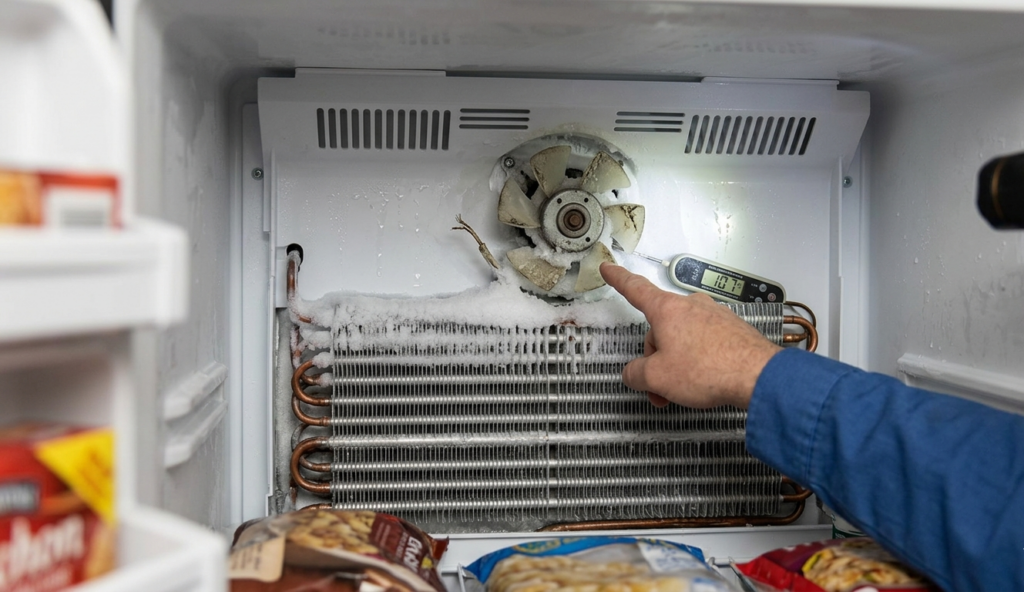
The evaporator fan circulates cold air inside the fridge and freezer. When it wears out or gets stuck, you may hear squeaking, chirping, or even a high-pitched whine.
Signs to watch for:
- Noise coming specifically from the freezer
- Uneven cooling between shelves
- Frost buildup on food or walls
If ignored, cooling efficiency drops, and food may spoil faster. For a more detailed explanation of common refrigerator noises, check Whirlpool’s official guide: Why is my refrigerator making noise?
3. Noise from the Compressor
The compressor is the most important part of your fridge. A soft hum is normal, but loud knocking, clicking, or clattering can mean something is wrong.
What to do:
- Check to see if the fridge is level.
- Pull it slightly away from the walls to prevent vibration.
- Call a professional if the noise doesn’t stop. Fixing a compressor is hard and not something you can do yourself.
If you don’t fix compressor problems, your refrigerator could break down completely, which is one of the most expensive repairs.
4. Problems with the ice maker
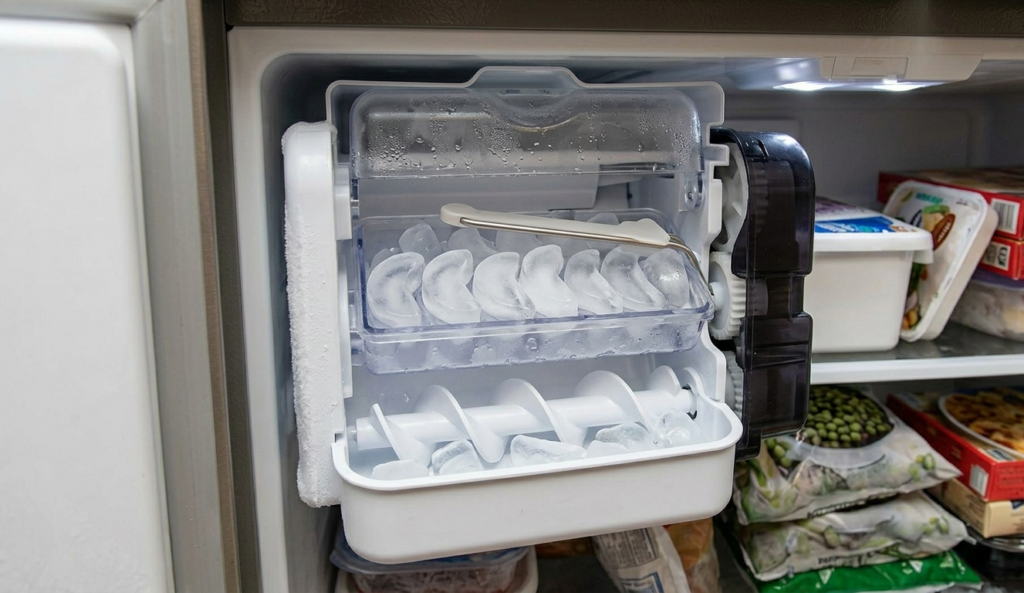
Ice makers are known for making grinding, knocking, or clunking noises. These usually happen when the tray is full of water or the ice cubes fall.
Quick fix:
- Look for things that might be blocking the water supply line.
- Turn off the ice maker if you don’t need it to cut down on noise.
If you’re unsure whether the sound is normal, Samsung has a helpful troubleshooting guide: What should I do when the refrigerator makes noise?
5. Loose Parts or Vibrations
Floors in older homes in Carmel and Fishers are often not level. Panels or shelves may rattle when a refrigerator isn’t level.
Simple fix:
- Ensure that any loose screws or panels are tight.
- Adjust the leveling legs.
- Place padding or a mat underneath to absorb vibration.
This is one of the easiest things to do yourself, and it usually fixes the problem right away.
6. The sounds of the defrost cycle
It’s normal for popping, sizzling, or crackling sounds to happen during defrost cycles. These happen when ice melts, and water drips onto the heater.
These sounds are normal during defrosting; see KitchenAid’s guide on why your fridge is noisy.
When Should You Worry?

Take action if you notice:
- Loud banging or knocking
- A buzzing sound that never stops
- A sudden increase in noise level
- Food that has gone bad or has problems with the cooling
At this point, a lot of homeowners look for “appliance repair near me” to find a professional to help them. Don’t wait until the fridge stops cooling down completely; fixing it early saves money.
DIY Tips to Fix a Noisy Refrigerator
Try these simple steps before calling a technician:
- Clean condenser coils every six months.
- Ensure proper airflow around the fridge.
- Remove items that vibrate against walls or shelves.
- Use adjustable legs to make the refrigerator level.
- Look for any items that might obstruct the fans.
These easy steps can often fix common noise problems without the help of a professional.
How to Prevent Refrigerator Noise in the Future
Clean It Regularly
The biggest problems are dust and dirt. Cleaning the coils should be a regular part of your seasonal home maintenance.
Put It in the Right Place
Make sure there is space around the fridge for air to flow. Putting it too close to walls or cabinets makes it vibrate more.
Don’t Overload
Too many things block airflow and make fans work harder. Arrange shelves so that air can flow freely.
Regular Maintenance
Every few years, have a professional service done. A technician can find small problems before they turn into big ones that cost a lot to fix.
When to Call a Professional Appliance Repair Service
DIY fixes are great, but some problems require expert tools and training. Call a professional if:
- The compressor is failing
- There are electrical problems
- Internal components are damaged
- Noise continues despite cleaning and leveling
Local technicians in Carmel, Fishers, and nearby areas can quickly diagnose and repair issues, restoring peace to your kitchen.
Frequently Asked Questions (FAQ)
1. Why is my fridge making so much noise all of a sudden?
It could be a broken fan, a problem with the compressor, or parts that aren’t tight enough.
2. Is it normal for a fridge to hum?
When the compressor is running, humming is normal.
3. Is it possible for me to fix a refrigerator that makes noise?
Yes, cleaning, leveling, and tightening parts usually help.
4. How much does it cost to fix a refrigerator?
Repairs typically range from $100 to $400, depending on the issue.
5. Should I replace my fridge if it’s noisy?
Not necessarily. Many problems are repairable.
6. How often should I clean my refrigerator?
Every six months is the ideal timeframe.
7. Does noise impact how well a refrigerator works?
Excessive noise frequently indicates that the cooling system isn’t functioning optimally.
Final Thoughts
A noisy refrigerator doesn’t always mean disaster, but ignoring it can lead to bigger problems down the road. By understanding the causes and applying simple fixes, you can extend your appliance’s lifespan and avoid costly breakdowns. If the noise continues, don’t wait; our Carmel and Fishers appliance repair experts are ready to help.
Contact us here to book an inspection today and get your fridge running quietly again.