
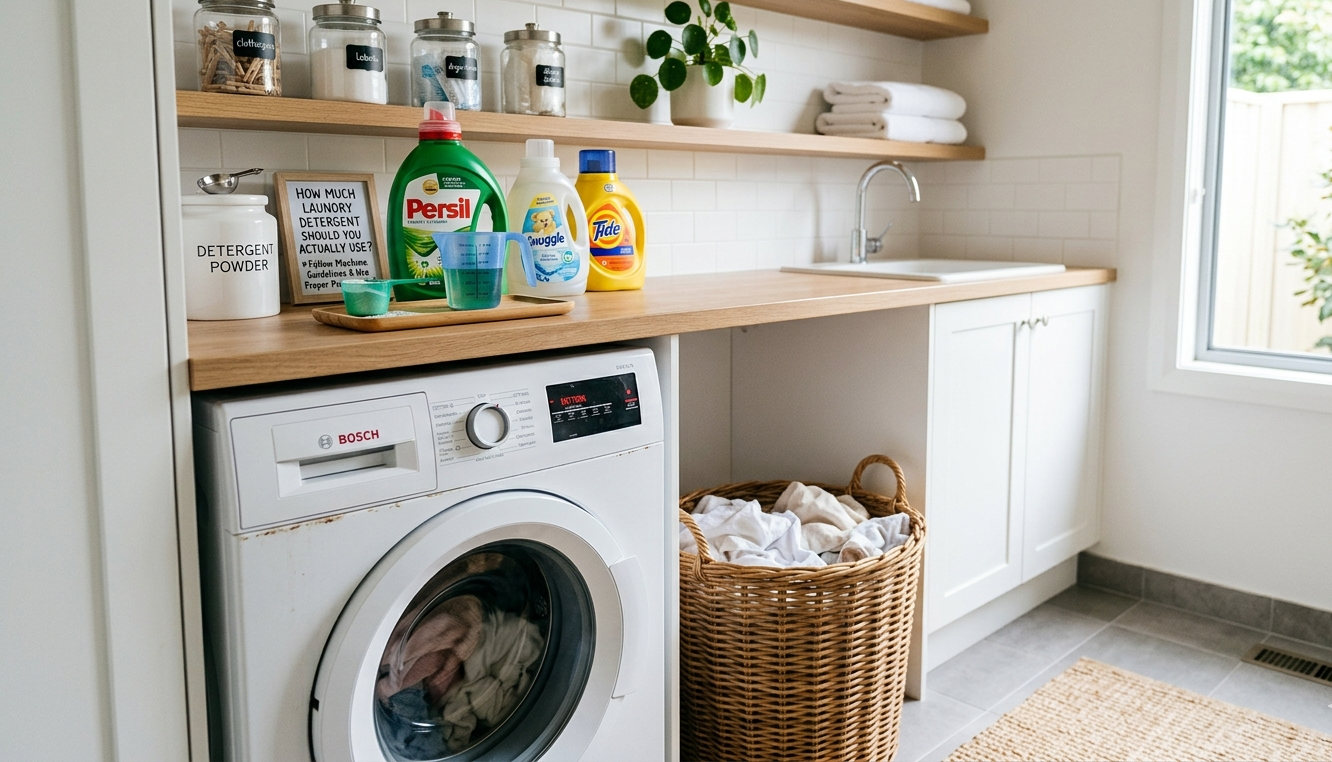
Doing laundry seems simple enough: throw clothes in the washer, add detergent, and press start. However, the reality is that many people tend to overuse detergent. The right laundry detergent amount makes all the difference: too much leaves residue and odors, while too little means clothes don’t get fully clean. Let’s break down how to measure detergent properly in a friendly, practical way.
Why the Amount of Detergent Matters
Using the right amount of detergent isn’t just about saving money. It’s about protecting your clothes and your washer.
- Too much detergent: Residue on clothes, funky smells in the washer, wasted money.
- Too little detergent: Clothes don’t get fully clean, odors linger, and stains remain.
Think of detergent like seasoning in cooking: the right amount makes everything better, but too much ruins the dish.
Factors That Affect How Much Detergent You Need
1. Type of Washing Machine
- High-efficiency (HE) washers use less water, so they need less detergent. Always look for the “HE” symbol on detergent bottles.
- Standard washers use more water, so they can handle a bit more detergent.
2. Load Size
- Small load: about 1-2 teaspoons of liquid detergent.
- Medium load: 2-3 teaspoons.
- Large load: 3-4 teaspoons.
Powder detergent? Think in terms of tablespoons instead.
3. Soil Level
- Lightly worn clothes (like office wear) need less detergent.
- Heavily soiled clothes (gym gear, kids’ play clothes) need more.
4. Water Hardness
Hard water makes detergent less effective, so you may need a little extra. Soft water? Use less.
Signs You’re Using Too Much Detergent
- Clothes feel stiff or sticky.
- White streaks or residue after drying.
- The washer smells musty.
- Skin irritation from leftover soap.
If you’ve observed any of these signs, it’s time to reduce your usage.
Practical Tips for Measuring Detergent
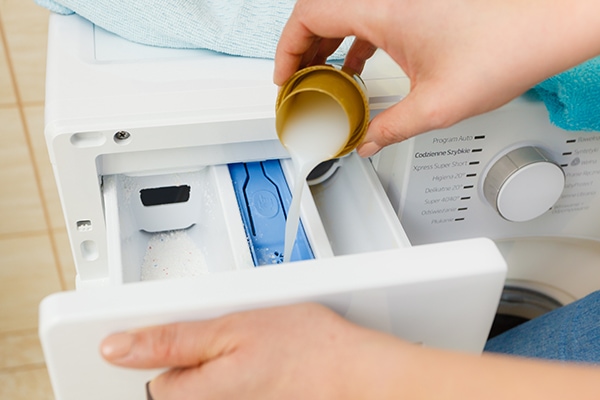
- Follow the cap lines: Detergent caps often have confusing markings. Start with the lowest line for small loads.
- Use a measuring spoon: It’s more accurate than eyeballing.
- Pre-measured pods: Convenient, but don’t toss in two unless you’re washing a huge, dirty load.
For a detailed breakdown, Whirlpool has a helpful guide on detergent use: How Much Laundry Detergent Should You Use.
Local Note: Indianapolis Homes & Hard Water
If you live in or near Indianapolis, you may already know that the water here is usually hard. That means detergent doesn’t dissolve as easily, so a slightly higher dose may be needed. But don’t go overboard; just a small adjustment is enough. For advice tailored to local households, you can always reach out to a trusted local appliance expert.
Common Mistakes to Avoid
- More detergent doesn’t mean cleaner clothes.
- Ignoring washer type (HE machines really do need less).
- Ignoring the load size (a few shirts don’t need a full cap).
- Skipping maintenance can lead to buildup; run a washer-clean cycle monthly to prevent such issues.
Common Questions:
1. How much detergent should I use for a small load?
About 1–2 teaspoons of liquid detergent or 1 tablespoon of powder.
2. Is it okay to use regular detergent in a HE washer?
You shouldn’t. The washers need low-sudsing detergent. Using regular detergent can cause residue and damage.
3. Do detergent pods work better than liquid?
Pods are convenient and pre-measured, but they don’t let you adjust for smaller loads. Liquids and powders give more flexibility.
4. What happens if I use too much detergent?
Residue on clothes, odors in the washer, wasted money, and potential machine damage.
5. How do I know if my water is hard?
Some signs are spots on dishes, laundry that is hard to wash, and soap that doesn’t lather well. You can also buy a kit to test the water.
6. Should I use fabric softener if I cut back on detergent?
Yes, fabric softener can help with softness and static, but it doesn’t replace detergent.
7. How often should I clean my washer?
At least once a month. Use a washer-clean cycle or a cleaning tablet.
The Bottom Line
The truth is that many of us have been pouring too much detergent for years. The good news is that you will notice that your clothes smell better, your washer is cleaner, and you will even save money once you start using the right amount of laundry detergent. Think small because when it comes to detergent, less really is more.
If you live in Indianapolis and need help with washing machine maintenance or detergent advice, you can call us, and our friendly, trained staff will be happy to help.