
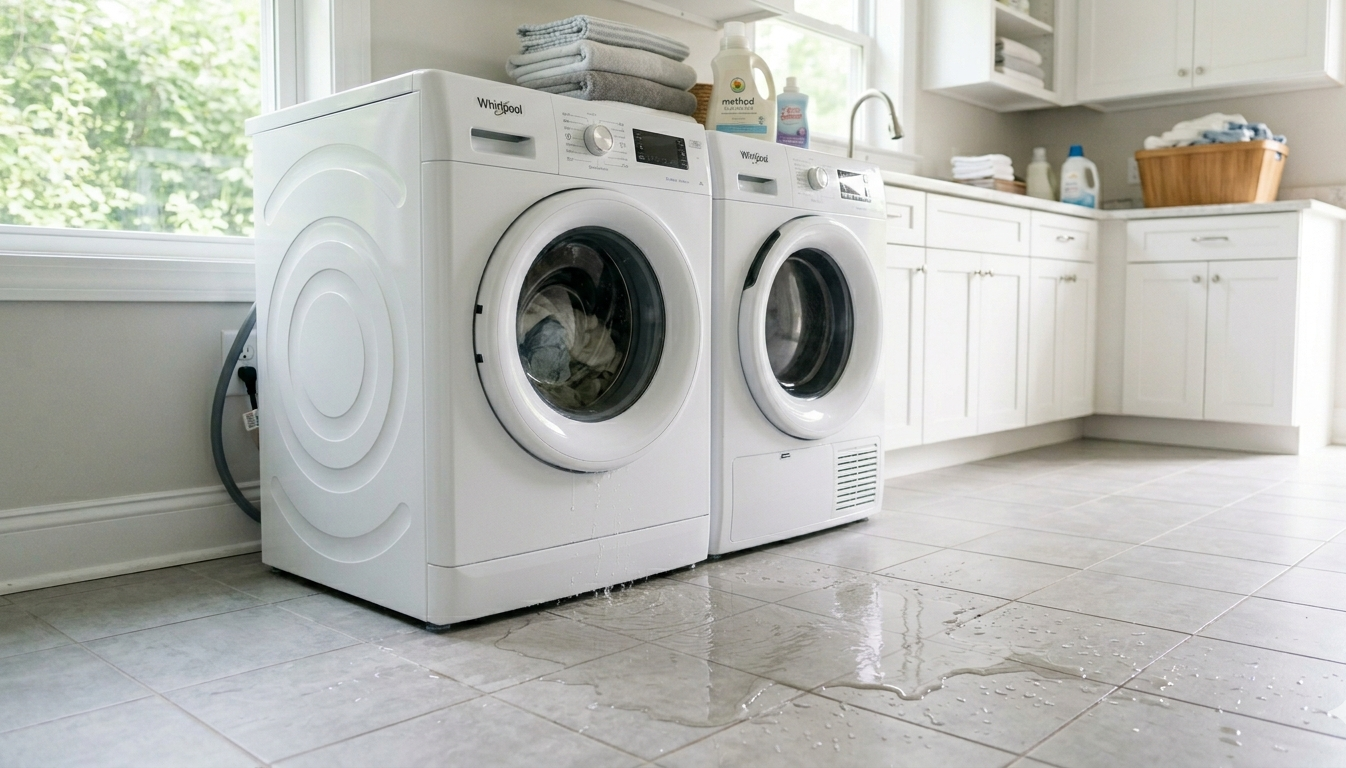
It usually starts with something small. A bit of water near your washing machine. Maybe a damp floor after a cycle. At first, it seems easy to ignore.
But when it comes to a washing machine leaking water, even minor signs can point to a bigger issue. In many cases, what looks like a small leak can turn into water damage, mold, or costly repairs if left unchecked.
If you’re a homeowner in Indianapolis and nearby areas, understanding what’s causing the problem and what to do next can help you avoid unnecessary stress and expenses. At Indy Appliance Xperts, we help homeowners identify appliance issues early and find practical solutions before they turn into bigger problems.
Why Is Your Washing Machine Leaking Water?
A washing machine leaking water does not always mean a major breakdown. In many cases, it is caused by small issues that develop over time, especially during wash cycles or draining.
Some common causes include:
- Worn or damaged door seals
- Loose or cracked hoses
- Clogged drain systems
- Overloading the machine
- Internal component wear
If you want a deeper understanding of possible causes, you can explore this guide on washing machine leaking issues.
Common Causes of a Washing Machine Leak
1. Damaged Door Seal
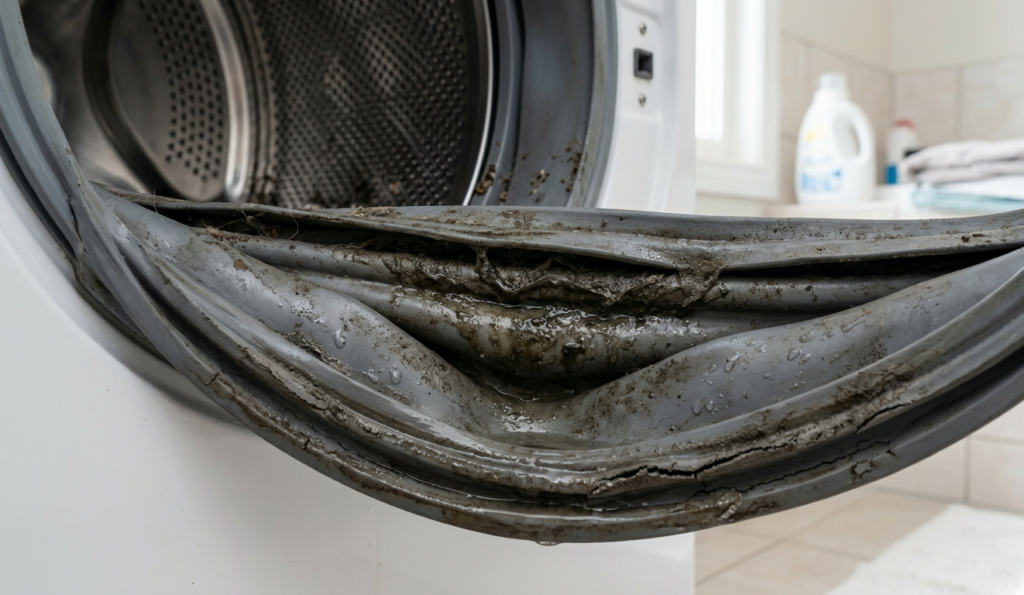
Front-load washers rely on a rubber gasket to keep water inside.
You might notice:
- Water leaking from the front
- Mold or buildup around the seal
2. Loose or Damaged Hoses
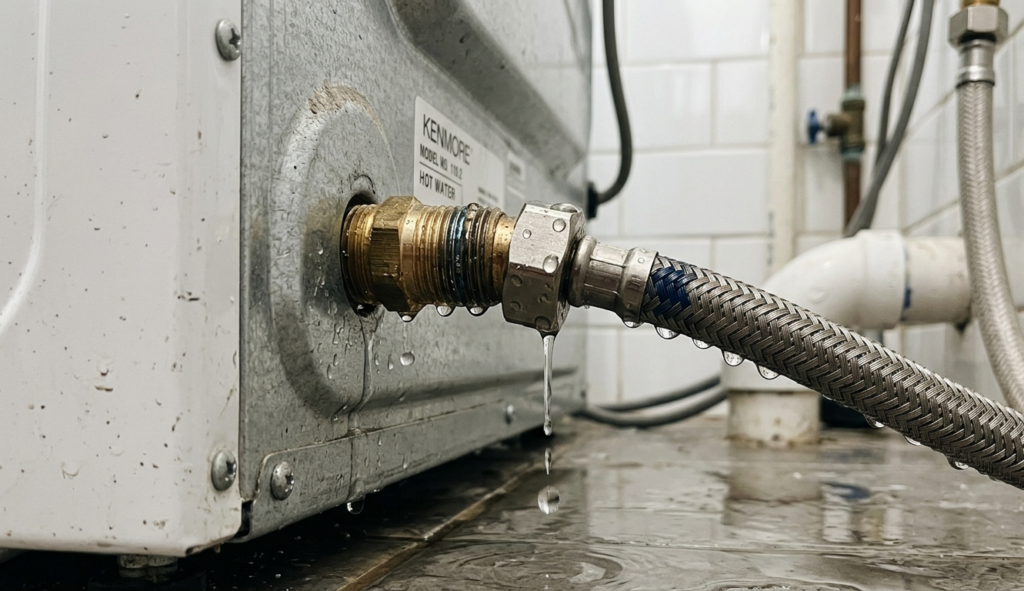
Hoses connected to the back of the machine can loosen or crack over time.
This can cause:
- Water pooling behind the washer
- Slow leaks that worsen over time
3. Clogged Drain or Pump
If water cannot drain properly, it may back up and leak.
This is often related to buildup issues, similar to how to flush hard water buildup from your washer.
4. Overloading the Machine
Too many clothes can put pressure on the system, causing water to escape.
5. Internal Component Wear
As washing machines age, internal parts begin to wear down. Over time, components such as pumps, valves, and seals may no longer function as efficiently as they once did.
If your appliance is older, it may be worth considering whether repair is still the best option or if replacement makes more sense.
Warning Signs You Should Not Ignore
A washing machine leak often builds up gradually. You might notice:
- Small puddles after washing cycles
- Damp flooring nearby
- Unusual noises
- Reduced performance
These signs may seem minor at first, but they can point to underlying issues that should not be ignored. In many cases, early warning signs appear before the problem becomes more serious or costly to fix.
What You Can Check First
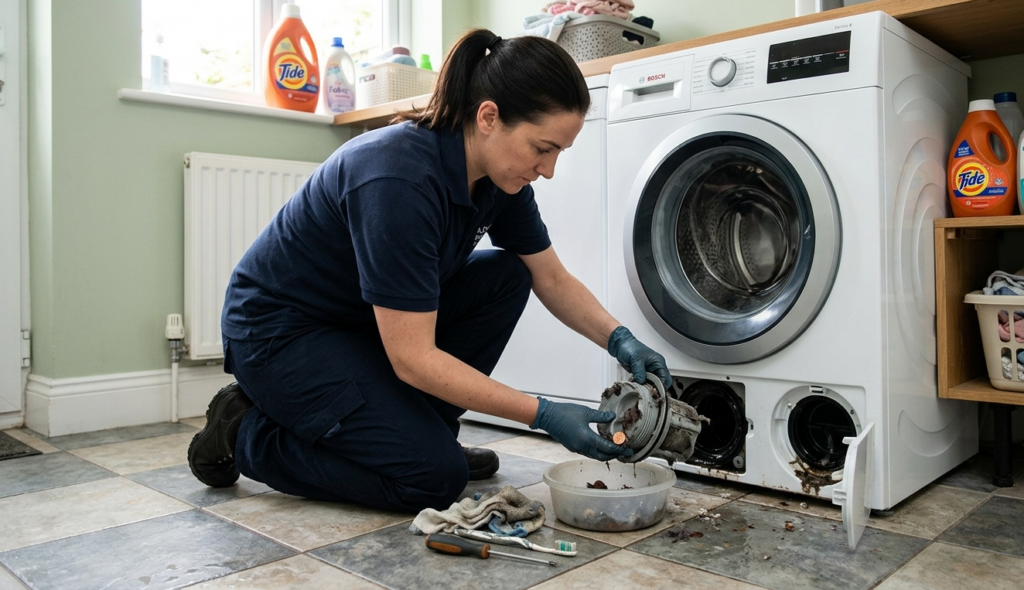
Before calling for help, try these simple checks:
✔ Inspect Hoses
Make sure they are tight and not cracked.
✔ Check Door Seal
Look for buildup or damage.
✔ Avoid Overloading
Follow recommended load sizes.
✔ Clean the Drain Area
Remove debris that may block water flow.
You can also check this troubleshooting guide on what to do if your washing machine leaks for additional insights.
In many cases, these steps can resolve minor causes of a washing machine leaking water.
When Maintenance Is Not Enough
Regular care helps, but not all problems can be solved with basic checks.
If the issue keeps coming back or worsens, it may be time to look deeper.
In some cases, recurring problems can be a sign of underlying damage or wear that is not immediately visible. You can also read more about is it safe to keep using a faulty appliance to better understand when it’s best to stop using an appliance and have it checked.
When It Makes Sense to Get Professional Help
There are times when checking things yourself is no longer enough.
You may want to consider professional help if:
- The leak does not stop
- Water is coming from underneath
- The machine is not functioning properly
- You notice unusual sounds or behavior
At this point, having the appliance properly checked can help prevent further damage. If you are in Indianapolis or nearby areas, getting a proper diagnosis can save you time and avoid guesswork.
Why Acting Early Matters
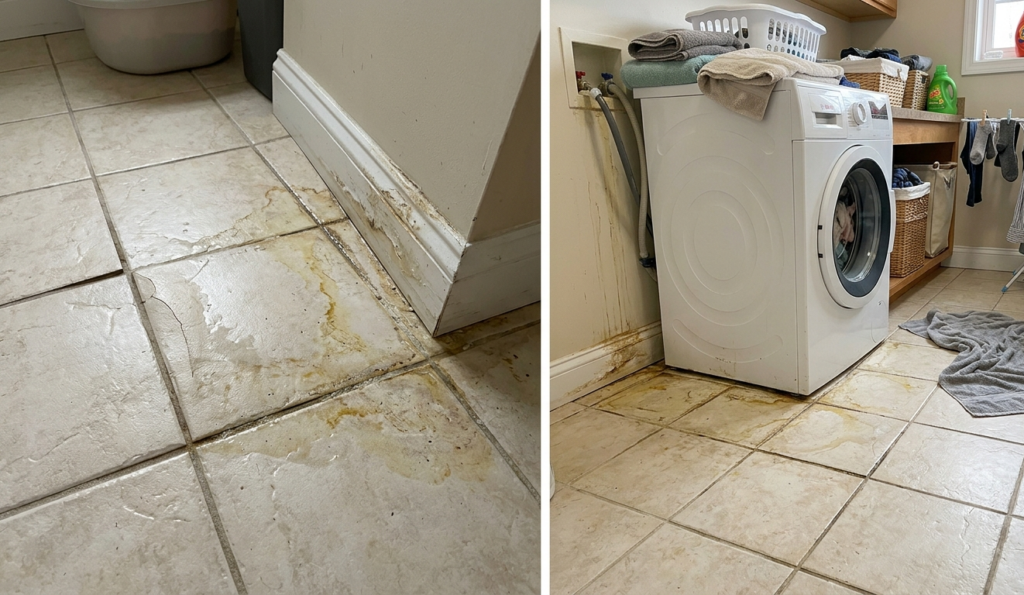
A washing machine leaking water may seem minor at first, but it can lead to the following:
- Floor damage
- Mold growth
- Increased repair costs
- Appliance failure
In many cases, these problems develop gradually. What starts as a small leak can turn into a bigger issue if not addressed early.
Frequently Asked Questions
Why is my washing machine leaking water from the bottom?
A washing machine leaking from the bottom is often caused by hose issues, a clogged drain system, or worn internal components. In some cases, water may build up inside the machine and overflow if it cannot drain properly. Checking hoses and drainage areas is a good starting point.
Can I still use my washing machine if it is leaking?
It is generally not recommended to continue using a leaking washing machine. Even a small leak can lead to water damage, mold, or electrical concerns over time. It is best to pause use and identify the cause early.
Is a leaking washing machine expensive to fix?
The cost depends on the cause. Minor issues such as tightening hoses or cleaning a blockage are usually simple to address. However, if the problem involves internal parts, the repair may be more involved. The age of the appliance can also affect your decision.
How do I prevent washing machine leaks in the future?
Regular maintenance can help reduce the risk of leaks. This includes checking hoses, cleaning the machine, avoiding overloading, and using the correct detergent. Staying consistent with basic maintenance helps keep your washer in good condition.
What to Keep in Mind
A washing machine leaking water is not something to ignore. Small issues can quickly turn into bigger problems if left unchecked.
Understanding the cause, checking simple fixes, and acting early can make a big difference.
If you are unsure what is causing the issue or need help with your appliance, you can contact our team to discuss your situation and next steps.