

It’s not unusual to hear some sound coming from your refrigerator. A low hum or occasional click is part of normal operation.
But when your Frigidaire refrigerator is making noise that sounds louder, unusual, or different than before, it can be a sign that something is not working as it should.
In some cases, these sounds are normal, but in others, they can be early signs of a problem. Knowing when to worry can help you avoid bigger issues.
You might notice buzzing, rattling, or even knocking sounds. At first, it may seem harmless. Over time, though, these noises can point to issues that may affect performance or lead to bigger repairs.
If you’re a homeowner in Indianapolis and nearby areas, understanding what these sounds mean can help you decide what’s normal and when it’s time to take action. At Indy Appliance Xperts, we help homeowners identify appliance issues early and find the right solution before they become more serious.
1. Normal Operating Sounds
Not all noise is a problem.
Your refrigerator naturally makes sounds such as the following:
- Humming from the compressor
- Clicking during cycles
- Light buzzing from fans
You may also hear light gurgling or flowing sounds. This usually comes from refrigerant moving through the system and is considered normal. As long as the sound is consistent and not getting louder, it typically does not indicate a problem.
For a more detailed breakdown of normal refrigerator sounds, you can refer to this Frigidaire refrigerator noise guide.
2. Loose or Misaligned Parts
If your Frigidaire refrigerator is making noise that sounds like rattling, it could be due to loose components.
This may include:
- Shelves not sitting properly
- Items vibrating inside
- Loose panels or screws
You might notice the noise changes when you open or close the door.
3. Condenser Fan Issues
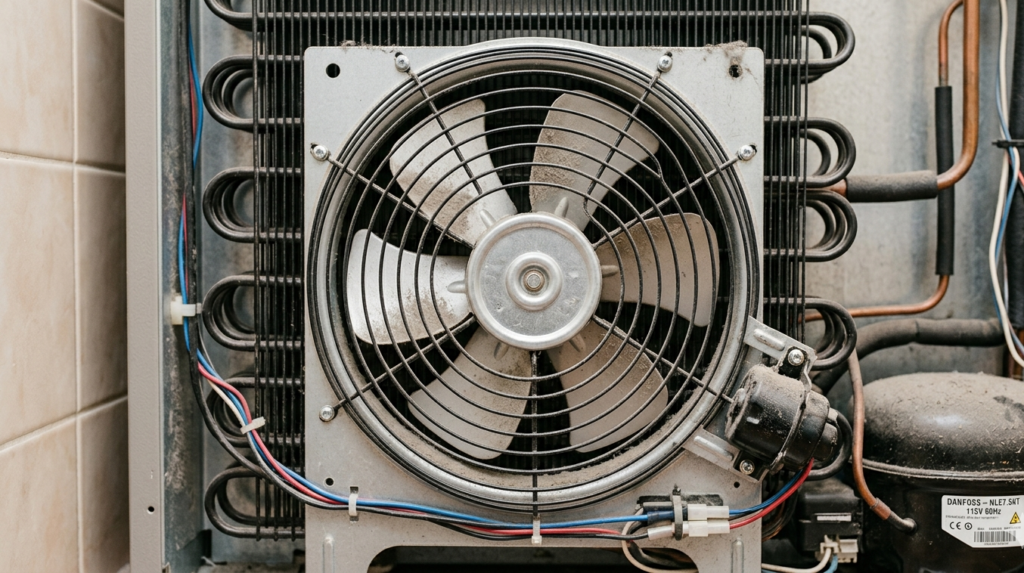
The condenser fan helps cool the system. If it becomes dirty or worn out, it can create a louder buzzing or grinding sound.
Dust buildup is a common cause, especially over time.
Often, the location of the sound can help you narrow down the cause. Noise coming from the back or lower part of the refrigerator is often related to the condenser fan or components near the compressor.
4. Evaporator Fan Problems
The evaporator fan circulates air inside the refrigerator.
If it starts to fail, you may hear:
- Squealing
- Chirping
- High-pitched noises
If the sound seems to come from inside the freezer or behind the back panel, it may point to the evaporator fan. This fan circulates cold air, and when it starts to wear out or gets obstructed, it can create unusual noises.
5. Compressor Noise
The compressor is one of the most important parts of your refrigerator.
A louder or irregular humming or knocking sound may indicate increased strain or wear. If this type of noise becomes more frequent or is paired with cooling issues, it may be a sign that the unit needs attention.
6. Ice Maker or Water Line Issues
If your refrigerator has an ice maker, it may produce clicking or buzzing sounds during operation.
However, an unusual noise could mean the following:
- A blocked water line
- Ice buildup
- Valve issues
These problems can sometimes affect performance if left unchecked.
7. Uneven Placement or Vibration
Sometimes the issue is not internal.
If your refrigerator is not level or is touching nearby surfaces, it can cause vibration and noise.
You might notice:
- Rattling against cabinets
- Increased noise during operation
Adjusting the leveling feet can often reduce this.
Airflow and Overloading
Airflow plays a bigger role than most people think. When vents inside the refrigerator are blocked, or the unit is overfilled, air cannot circulate properly.
This forces internal components to work harder, which can lead to increased noise over time. Keeping enough space between items can help maintain proper airflow.
Warning Signs You Should Not Ignore
While some sounds are normal, others may indicate a deeper issue.
Pay attention to:
- The noise suddenly becomes louder
- The sound changes over time
- Cooling performance is affected
- The unit cycles more frequently
These are often early warning signs that your refrigerator noise may be more than just normal operation.
Paying attention to where the sound is coming from and how it changes over time can help you understand whether it is part of normal operation or something that needs attention.
If you’re unsure whether it’s still safe to continue using your appliance, you can read is it safe to keep using a faulty appliance.
What You Can Check First

Before calling for help, there are a few simple things you can do:
- Check for loose items
Make sure nothing inside is vibrating. - Clean around the unit
Dust buildup can affect fans and airflow. - Ensure proper placement
Make sure the refrigerator is level and not touching walls or cabinets. - Listen carefully
Identify where the sound is coming from.
In many cases, these small checks can help you narrow down the cause of the noise.
When It Makes Sense to Get Professional Help
There are times when unusual sounds point to something more serious.
You may want to consider professional help if:
- The noise is getting louder
- The refrigerator is not cooling properly
- The sound is constant or irregular
- You suspect internal component issues
At this point, having the appliance properly checked can help prevent further damage. If you are in Indianapolis or nearby areas, getting a proper diagnosis can save you time and avoid guesswork.
If the issue continues, it may be time to have it checked by a professional to properly diagnose the problem.
For issues like this, having the refrigerator checked by a professional can help identify the problem and restore proper performance.
If your refrigerator is older and showing signs of wear, you may also want to consider whether repair is still the best option by reading is it better to repair or replace old appliances.
Why Acting Early Matters
A noisy refrigerator may seem like a minor issue, but it can lead to:
- Reduced cooling efficiency
- Increased energy use
- More expensive repairs
- Unexpected breakdowns
On many occasions, small warning signs appear before the problem becomes more serious.
FAQ’s About Refrigerator Noise
Is it normal for a Frigidaire refrigerator to make noise?
Yes, some level of noise is completely normal. Refrigerators naturally produce sounds such as humming from the compressor, clicking during cycles, and light buzzing from fans. You may also hear gurgling sounds from refrigerant flow, which is part of normal operation. However, louder or unusual noises may indicate a developing issue.
Why is my Frigidaire refrigerator suddenly louder than before?
A sudden increase in noise can be caused by fan issues, dust buildup, or increased strain on the compressor. It may also be due to blocked airflow or the unit not being level. If the noise continues or becomes more noticeable, it is best to check it early.
Can I fix refrigerator noise myself?
Some minor issues can be addressed at home, such as adjusting the leveling of the refrigerator, removing vibrating items, or cleaning around the unit. However, if the noise is coming from internal components like the compressor or fan motors, it is safer to have it professionally checked.
When should I be concerned about refrigerator noise?
You should pay attention if the noise becomes louder, changes in pattern, or is paired with cooling issues. These are often signs that the problem may be getting worse and should not be ignored.
Can a noisy refrigerator lead to bigger problems?
Yes, unusual noises are often early warning signs. Ignoring them can lead to reduced efficiency, higher energy costs, or more serious mechanical issues over time. Addressing the problem early can help avoid more expensive repairs.
What This Means for You
If your Frigidaire refrigerator is making noise, it’s not always a cause for concern. Some sounds are completely normal.
But when the noise changes, becomes louder, or affects performance, it may be time to take a closer look.
Understanding what these sounds mean and knowing when to take action can help you avoid bigger problems down the line.
If you’re unsure about what you’re hearing or the noise continues, it may be time to have your refrigerator checked before the issue becomes more costly. You can speak with our refrigerator repair expert to discuss your situation and next steps.